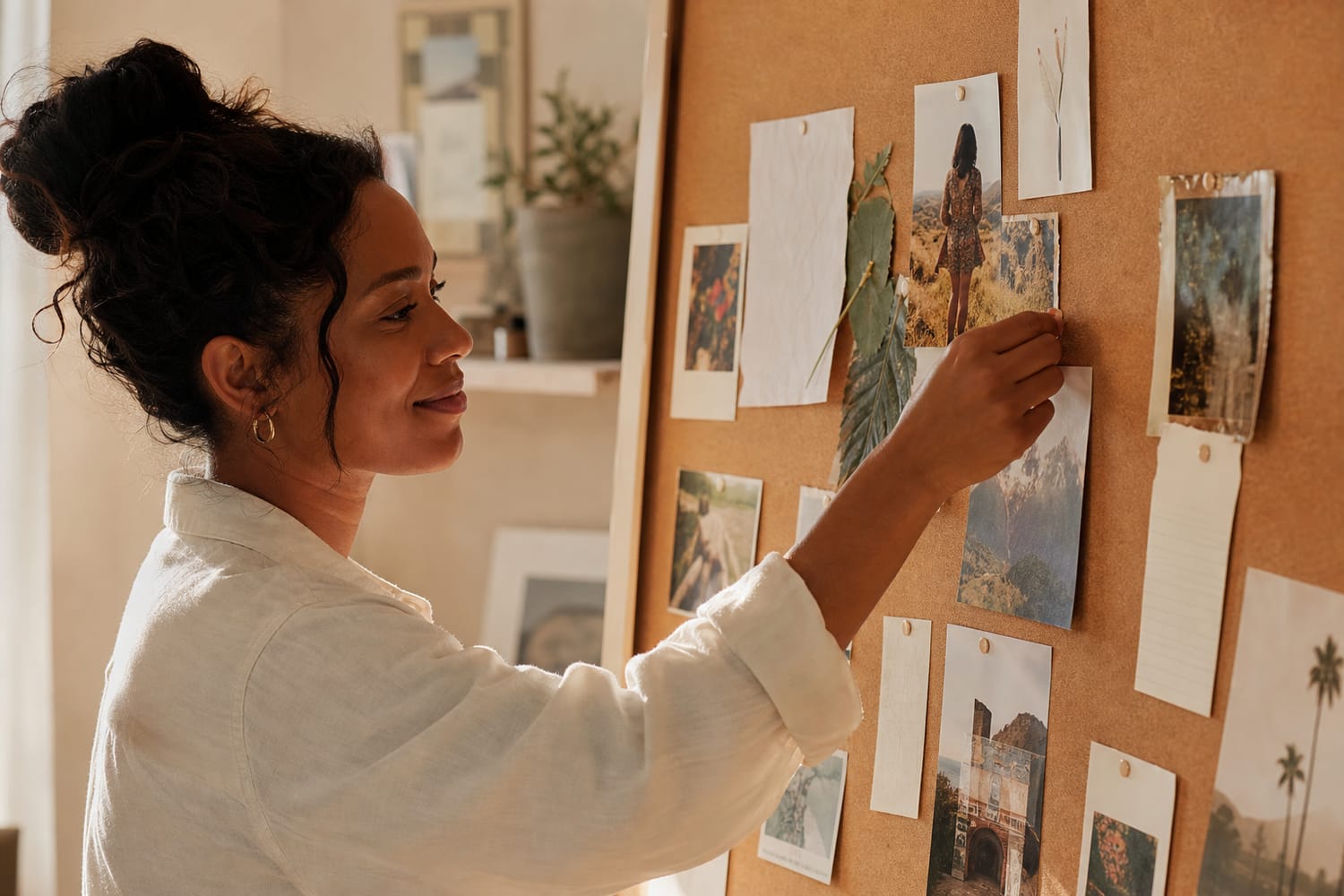
You sit down with a stack of magazines, a glue stick, and the best intentions. An hour later you have a board covered in beaches, sports cars, and a quote about living your best life. It looks lovely. Then you hang it on the wall and, somewhere in the next fortnight, you stop seeing it entirely.
If that sounds familiar, the problem was never you. It is how most vision boards get made. They become a collage of nice things rather than a tool that actually moves you.
A vision board done well is different. It is not a wish list you hope the universe delivers. It is a daily prompt that keeps what matters in front of you and nudges you towards the next real step. Here is how to make one that does that, in eight steps.
Why most vision boards quietly fail
A picture of a goal is not the same as a plan for it. When a board is all dream and no direction, your brain treats it like wallpaper. Pleasant, familiar, ignored.
The boards that work do two things at once. They show you the feeling you are reaching for, and they sit close enough to your daily life that they keep prompting action. Belief and action together. One without the other just gathers dust.
Keep that in mind as you build yours. Every choice you make below should pass one test. Does this point me at something I actually want, and can move towards?
The 8 steps to create your vision board
1. Start with reflection, not scissors
Before you cut out a single image, get honest about what you actually want. Walk through the main areas of your life. Career, relationships, health, personal growth, money and lifestyle. For each one, ask what you are quietly hoping for.
Write it down in plain words first. This is the step most people skip, and it is the one that makes everything after it work. It is also the step with the most evidence behind it: goals work best when they are specific and you can see the progress. You are not decorating a board yet. You are deciding what the board is for.
2. Choose physical or digital
There is no right answer here, only the one you will actually use.
A physical board, a piece of cork or poster board you can hold, has a presence that a screen does not. You walk past it. It catches your eye. A digital board, built on something like Pinterest or a simple slideshow, travels with you and is easy to update.
Pick the format that fits your life. If you are on your phone all day, digital might win. If you want something that lives on your wall and refuses to be ignored, go physical.
3. Gather your materials
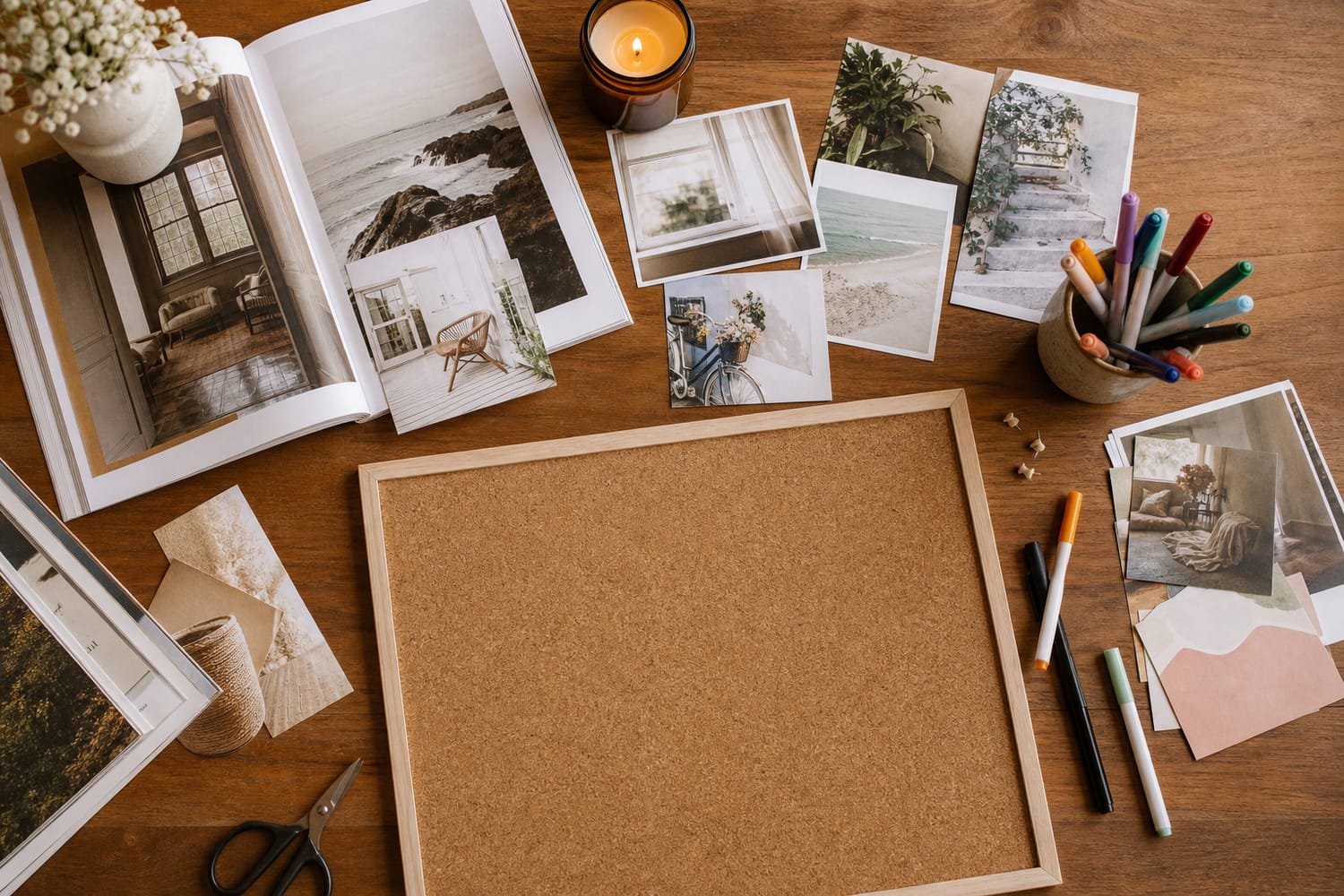
For a physical board you will want a base, a corkboard, poster board, or canvas, plus magazines or printed photos, scissors, glue or pins, and a few markers. Some decorative bits if you enjoy that.
For a digital board you just need your images saved in one place and a tool to arrange them. Either way, gather everything before you start so the making stays in flow rather than stop start.
4. Choose images and words that mean something
Now the satisfying part. Look through your materials and pull out anything that lands with a real feeling. Photos, colours, single words, short phrases.
The test is not whether it looks impressive. It is whether it moves you. A slightly scrappy photo that makes your chest lift is worth more than a glossy one you chose because it looked the part. Trust the gut reaction. Your subconscious is better at this than your inner critic.
5. Arrange and attach your elements
Lay everything out before you commit anything. Group images by theme, or by area of life, or simply by what looks right together. Move things around until the board feels like it tells a story you recognise.
Then fix them in place with glue, tape, or pins. Leave a little breathing room. A board with some space is easier to take in than one crammed edge to edge. You want your eye to land somewhere, not bounce off the clutter.
6. Add the finishing touches
This is where it becomes yours. A few affirmations written in your own hand, a strip of colour, a date you are working towards, a small reminder of why any of it matters.
Words you write yourself carry more weight than printed ones. If you want a quick source of phrases to start from, our positive affirmations generator is a simple place to find ones that fit.
7. Put it where you will actually see it
A vision board hidden in a drawer does nothing. The whole point is repeated, almost accidental exposure.
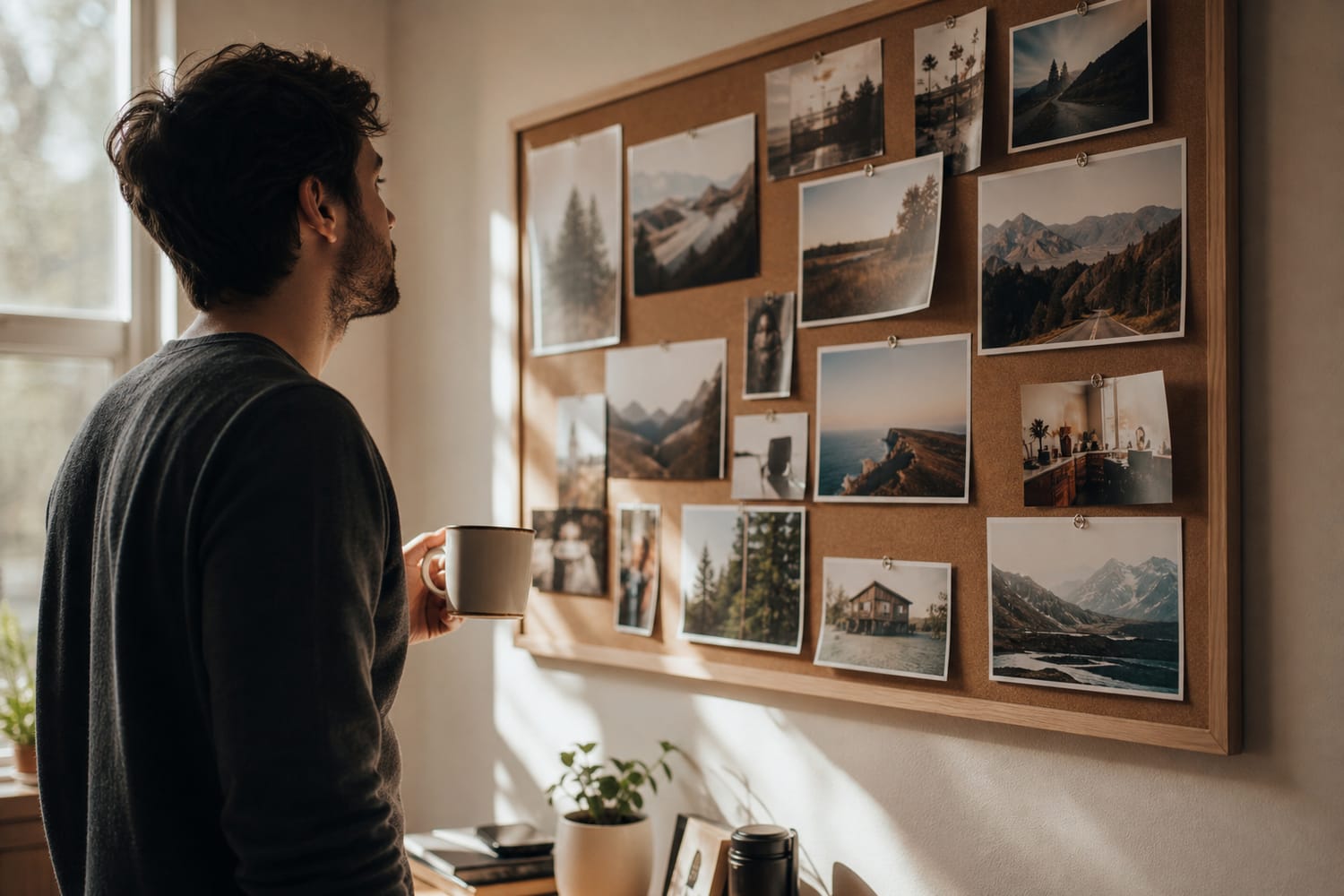
Hang it somewhere it crosses your eye line in the normal run of your day. Next to your desk, on the wardrobe door, as your phone lock screen if it is digital. You want to meet it often enough that it quietly seeps in.
8. Use it to fuel real visualisation
Here is the step that turns a poster into a practice. Spend a minute or two with your board each day. Do not just glance at it. Look at one part, and let yourself feel what it would be like to be living that.
Engage your senses. What would you see, hear, even smell in that moment? This is where a board stops being decoration and starts priming your brain to notice opportunities and move towards them. If you want to go deeper, our guide to visualisation techniques that lead to real action walks through how to do this in a way that actually changes behaviour.
Common mistakes that undo a good vision board
A few traps are worth naming, because they catch almost everyone.
Cramming too much on. A board trying to say everything ends up saying nothing. Choose your priorities and let them breathe.
Choosing images to impress. If you picked it for how it looks to others, it will not move you. Pick for feeling, every time.
Treating it as the finish line. The board is a prompt, not the work. Pair every part of it with a small action you can take this week.
Forgetting it exists. If you stop seeing it, it stops working. Move it, refresh it, sit with it. A vision board is a living thing, not a one off craft project.
I have made several of these over the years. Magazines, printed photos, pins, a cork board on the wall. My honest verdict is yes and no. Some of what went on those boards has arrived. Some of it I am still waiting on. What they were unquestionably good for was the deciding. Choosing what earns a place on the board forces you to work out what kind of life you actually want, which is harder, and far more useful, than it sounds. And if you struggle to picture things in your head, as plenty of people genuinely do, a board gives you something real to look at while you learn how.
Turn your board into momentum
A vision board is belief made visible. On its own that is a start, not a finish. The magic is not in the cork and the cut out photos. It is in the clarity you get from choosing what matters, and the small steps you take because you keep that clarity in front of you.
Build yours with intention. Put it where you will see it. Sit with it. Then let it point you at the next move, and actually make it. For more on living this way day to day, our guide to creating a positive life that lasts is a good next read, and you can find more in the Manifestation & Taking Action collection.
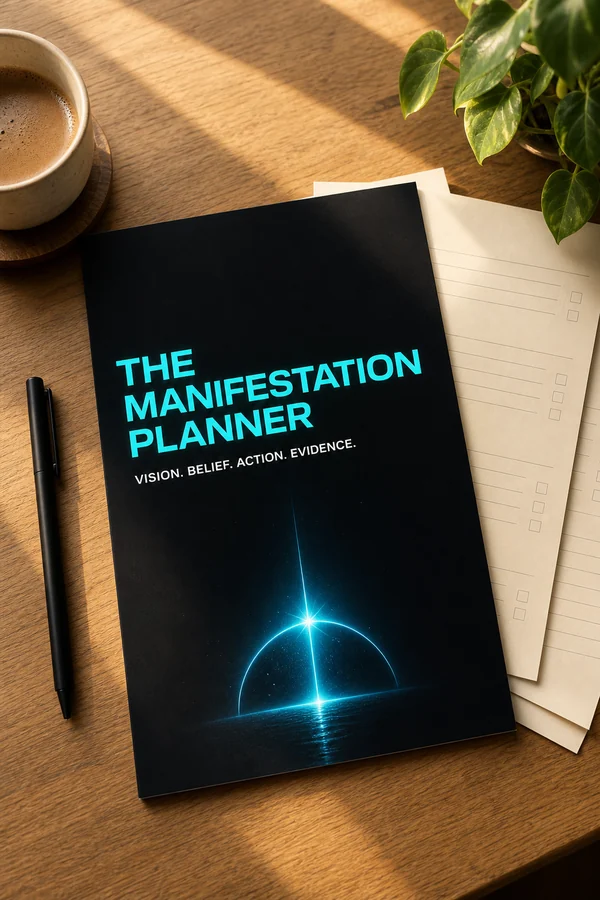
When you are ready for the next move, our free printable manifestation planner is the natural companion to a board. The board holds the vision. The planner turns it into three actions with a day and a time attached, and gives you somewhere to record what actually shifted. Print it as often as you like, one set per goal.